
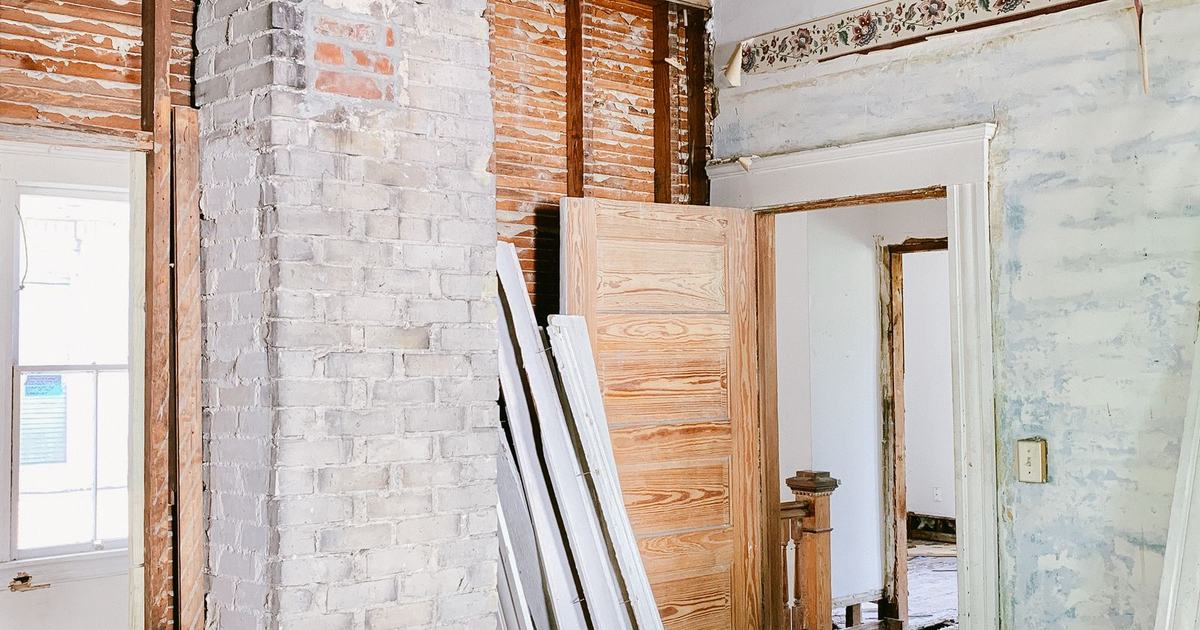
Old Kerala houses reward patience. The timber is usually better than anything you can buy today, the ventilation logic is sound, and the proportions are generous. They also hide damp, failed wiring and structural movement behind lime plaster. Choosing good home renovation contractors matters less than choosing correctly what to keep. This guide sets out a first pass triage for an old house in Kochi, indicative costs by scope, and the surveys to commission before you commit to any plan.
Key Takeaways
- Seasoned teak joinery, sound laterite walls and original floor tiles are usually worth retaining. Wiring, old plumbing and cement plaster over laterite usually are not.
- Renovation costs in Kochi range from around Rs 400 per sq ft for a cosmetic refresh to above Rs 2,100 per sq ft for a full gut renovation.
- Commission a structural assessment before finalising any retention plan. Triage lists are a starting point, not a survey.
What Is Usually Worth Keeping
Older Kerala houses contain materials and details that are difficult or impossible to replicate at sensible cost today. Identifying these early protects them from an over enthusiastic demolition crew and often reduces the overall budget by reusing what is already sound.
Seasoned teak and rosewood joinery is the clearest example. Timber of that quality and dryness is expensive now, and doors and windows can usually be restored rather than replaced. Laterite load bearing walls in sound condition perform well and hold thermal mass. Original floor tiles and terracotta are worth lifting carefully and relaying. Timber roof trusses free of rot can often be retained with selective member replacement. The courtyard and ventilation layout is usually the most valuable thing in the house.
Photograph and measure everything before any work begins, including details you do not currently intend to change. Old houses give up information slowly, and a record of the original condition is invaluable when a decision has to be revisited months later. Label salvaged material clearly and store it under cover, because reclaimed timber and tile left in the open through a monsoon frequently becomes unusable. Salvage that is properly protected often funds a meaningful part of the renovation.
What Should Almost Always Be Replaced
Some elements of an older house carry risk rather than character. Replacing them is not a matter of taste but of safety and long term building health. These are the items where retaining the original is a false economy that resurfaces within a few years.
Original electrical wiring should be replaced in full, without exception. Old cast iron and galvanised plumbing corrodes internally and will fail. Cement plaster applied over laterite traps moisture in the wall and causes the damp that owners often blame on the laterite itself, and lime based finishes perform far better. Asbestos sheeting of any kind requires specialist removal. Bathroom waterproofing and drainage from an earlier era will not meet current expectations and should be rebuilt.
Sequence these replacements before any finishing work begins. Rewiring and replumbing both involve chasing walls, and doing them after plaster and paint means doing that work twice. The temptation to start with the visible improvements is strong, particularly when budget is tight and progress feels slow, but it is the most reliable way to waste money on an old house. Services first, then fabric, then finishes, without exception.
- Rewire completely rather than extending existing circuits.
- Replace all cast iron and galvanised supply and waste pipework.
- Remove cement plaster from laterite and finish in a breathable system.
- Rebuild bathroom waterproofing and falls from the slab up.
What Renovation Costs by Scope
Renovation pricing depends on how deep you go rather than how large the house is. A cosmetic refresh and a full gut renovation of the same property differ by a factor of five. Establishing scope honestly at the start is what makes a renovation budget hold.
A cosmetic refresh covering paint, minor repairs and fittings sits at the lower end. A services overhaul that rewires and replumbs costs considerably more because it involves chasing walls and making good. Structural repair to walls, roof or foundations rises again. A full gut renovation, where everything except the structure is stripped and rebuilt, approaches the cost of new construction. At that point comparing against a rebuild becomes a genuine question rather than a rhetorical one.
Build a larger contingency than you would for new construction. Fifteen to twenty percent is realistic for an older property, because opening up walls and roofs routinely reveals conditions that no survey could have seen. Owners who budget renovation with a new build contingency almost always run short, and the shortfall tends to arrive at the least convenient moment, when the house is stripped and the only options are to spend or to stop.
Where budget is genuinely tight, stage the work rather than reducing its quality. Complete the services and the structural repairs first, live with plain finishes for a period, then return for the interior and architectural design work later. That sequence protects the building. Reversing it produces a house that looks finished and continues to deteriorate behind the paint.
Surveys to Commission Before You Commit
Renovation budgets fail when work begins before the building has been properly investigated. Unlike new construction, where the ground is the main unknown, renovation hides its unknowns inside walls and above ceilings. A small survey spend at the start protects a much larger construction budget.
Commission a structural assessment of walls, roof and foundations before finalising any retention plan. Open up a small number of test areas to check wiring, plumbing and timber condition rather than assuming. Survey for damp and identify its source, since rising and penetrating damp need different remedies. Where the house is old enough to matter, check whether any heritage or local planning constraint applies. National standards published by the Bureau of Indian Standards underpin the structural codes your engineer will work to.
Choose a contractor who has genuinely worked on older buildings rather than one who is willing to try. Techniques that suit new construction can actively damage historic fabric, and the most common example is applying modern cement based products to walls that need to breathe. Ask for references on comparable properties and speak to those owners. Experience with laterite, lime and seasoned timber is a specific skill set and it is not interchangeable with general contracting competence.
Renovate or Rebuild
At the deeper end of the scope range, renovation and rebuild converge in cost. The decision then turns on what you value rather than on arithmetic alone. Both answers can be correct for the same house depending on what the owner wants from it.
Renovation retains character, mature landscape and often a plot layout that current setback rules would no longer permit. Rebuild delivers modern layouts, better services and full design freedom, but you lose the original fabric permanently and start the approval process afresh. If the timber and walls are sound and the layout suits how you live, renovation usually wins. If the structure is compromised or the plan cannot adapt, civil construction services for a new build may be the better route.
There is also a middle path worth considering. Retaining the original structure while adding a new wing or rebuilding a failed rear section allows you to keep the character and the mature setting while gaining the layout and services a modern household expects. It is more complex to design and to detail than either pure option, but on many Kochi plots it produces the best result. Discuss it explicitly with your architect rather than treating the decision as binary.
Conclusion
Renovating an old Kerala house in Kochi works when the triage is done honestly and early. Protect the joinery, the sound laterite and the ventilation logic. Replace the wiring, the old pipework and the trapped damp without sentiment. Then commission a structural survey before you fix the budget. Experienced home renovation contractors will insist on that sequence rather than quoting from a walkthrough. To discuss an older property in Kochi, get in touch with our team.