
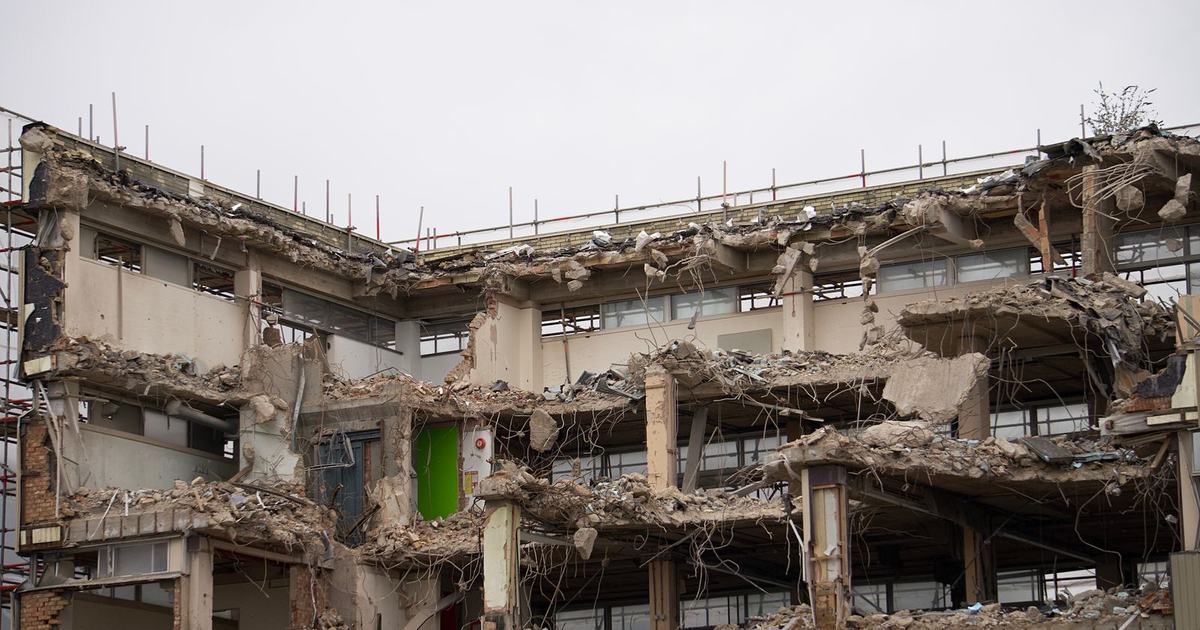
Demolition looks like the simplest phase of a project and is frequently the one that goes wrong most expensively. Neighbouring structures get damaged, debris disposal costs more than anyone budgeted, salvage worth real money gets sold by somebody other than the owner, and permits get sought after work has started. Choosing building demolition contractors properly matters. This guide covers permits, cost, salvage, safety and the specific risks of demolishing on a tight Kochi plot.
Key Takeaways
- Demolition requires permission in most Kochi locations. Confirm the requirement with the local body before any machine arrives on site.
- Debris disposal is often the largest single cost, and it is priced by volume and distance rather than by the size of the building.
- Salvage has genuine value. Agree in writing who owns the timber, steel, tiles and fittings before demolition begins.
Permits and What the Local Body Requires
Demolition is not automatically permitted simply because you own the building. Requirements vary between corporation, municipality and panchayat areas across the Kochi region, and starting without clearance creates problems that are difficult to unwind afterwards.
Confirm the requirement with the relevant local self government institution before mobilising. Applications and building related approvals across Kerala are processed through the K SMART platform, and within the Kochi region development control may also involve the Greater Cochin Development Authority depending on plot classification. Older buildings may carry heritage constraints that are not obvious from the property documents.
Where you intend to rebuild, coordinate the demolition permission with the new building sanction rather than treating them separately. Some approvals reference the existing structure, and demolishing before the new sanction is issued can complicate the application. Ask your architect to sequence these deliberately, because the order matters and correcting it afterwards is slow.
What Demolition Actually Costs
Demolition pricing is driven by three things that have little to do with the size of the building itself. Access, structure type and debris disposal distance determine the number, and any of them can double a quotation.
Machine access is the first variable. A plot with clear vehicular access allows an excavator to work efficiently. A constrained urban site requiring manual demolition, or partial manual work near a boundary, costs substantially more in labour and time. Structure type matters next, since reinforced concrete requires breaking and steel separation while laterite and brick come down comparatively easily.
Debris disposal is frequently the largest line. It is priced by load volume and haulage distance to an approved disposal site, and both are outside the contractor’s control. Ask for disposal to be quoted separately and per load rather than as a lump sum, so you can verify what actually left the site. Requiring disposal receipts is reasonable and prevents debris being dumped somewhere that becomes your problem later.
Check whether any tree removal is involved, because that frequently carries its own permission requirement separate from the building consent. Mature trees on a plot may be protected, and removing one without clearance creates a problem that is difficult to remedy. Where trees are being retained, protect them physically during demolition rather than relying on instruction, since root damage from machinery is common and the harm often appears a season later when the tree fails.
Salvage and What It Is Worth
An older Kerala building contains materials with real market value, and the question of who owns them should be settled before demolition rather than discovered afterwards. This is a routine source of dispute and it is entirely avoidable.
Seasoned teak and rosewood joinery, doors, windows, rafters and pillars can be worth a substantial sum, particularly from older houses. Clay roof tiles, floor tiles, structural steel, copper wiring and brass fittings all carry value. In many demolition quotations the contractor has implicitly assumed the salvage is theirs, which is why the price looks attractive.
Decide what you want to retain and list it explicitly in the contract. Materials you intend to reuse should be removed carefully by hand before machine demolition begins, which costs more but preserves the value. Everything else can be negotiated, either as your property to sell or as an offset against the demolition price. Either arrangement is fine provided it is written down beforehand.
Establish where the site boundary actually runs before demolition rather than assuming the existing wall marks it. Older Kerala plots frequently have boundaries that differ from what has been built, sometimes by a meaningful margin, and demolition is the moment that discrepancy becomes visible and contentious. A surveyed boundary, agreed with neighbours in advance, prevents a dispute that is very difficult to resolve once the old structure has gone and there is nothing left to reference.
- List retained items explicitly before work begins.
- Remove reusable timber and tile by hand before machine work.
- Agree whether remaining salvage offsets the demolition price.
- Store salvaged material under cover, not in the open.
Protecting Neighbours and Adjoining Structures
On a typical Kochi plot the neighbouring building is close, sometimes sharing a boundary wall. Damage to an adjoining property is the most serious risk in demolition and the most expensive to resolve once it has occurred.
Commission a condition survey of adjoining structures before starting, with dated photographs of existing cracks and defects. This protects you as much as the neighbour, because without it any pre existing crack becomes your responsibility. Notify neighbours in writing of the intended dates and method. Where a wall is genuinely shared, establish ownership from the property documents before touching it.
Require the contractor to carry adequate third party insurance and verify the policy rather than accepting an assurance. Use controlled methods near boundaries, which usually means manual demolition of the last metre rather than machine work. Dust and vibration control matter too, and a contractor who dampens the work and schedules noisy activity within reasonable hours generates far fewer complaints.
Agree the site condition you expect at handover between demolition and construction. Cleared to ground level, foundations grubbed out or left in place, levels reduced or maintained, and the plot boundary reinstated. These are all different outcomes at different prices, and a demolition contractor who has not been told will choose the cheapest interpretation. Where the same firm handles both demolition and the rebuild, this ambiguity disappears entirely, which is a genuine argument for a single appointment.
Selecting a Demolition Contractor
Demolition attracts operators with low overheads and variable standards, because entry into the trade is easy. Applying the same selection discipline you would use for construction removes most of the risk before it materialises.
Verify insurance first, specifically third party liability and workmen’s compensation. Ask what method they intend to use and how they will handle work near the boundary. Ask where debris will be disposed of and require receipts. Ask about asbestos, because older Kerala buildings frequently contain asbestos sheeting which requires specialist handling rather than being broken up on site.
Visit a site they are working on if possible. Look for basic safety equipment, controlled working and protection of adjoining property. Demolition sites are inherently untidy but they should not be chaotic. Where demolition precedes a rebuild, appointing one firm for both often works better, since responsibility for site condition at handover between phases does not fall between two parties. Our civil construction services cover demolition and rebuild as a single scope.
Consider timing relative to the monsoon. Demolition during heavy rain is slower, messier and considerably harder on neighbours, since debris routes become muddy and dust control turns into mud control. Where the programme allows, scheduling demolition for the drier months and starting foundations immediately afterwards produces a cleaner process and better relations with everybody living nearby, which matters on a tight urban plot.
Conclusion
Demolition deserves the same care as the building that follows it. Confirm permits with the local body before mobilising, understand that access and disposal drive the cost more than building size, settle salvage ownership in writing, and protect adjoining structures with a documented condition survey. Competent building demolition contractors will raise all four before you do. To discuss a demolition and rebuild in Kochi, contact our team.