
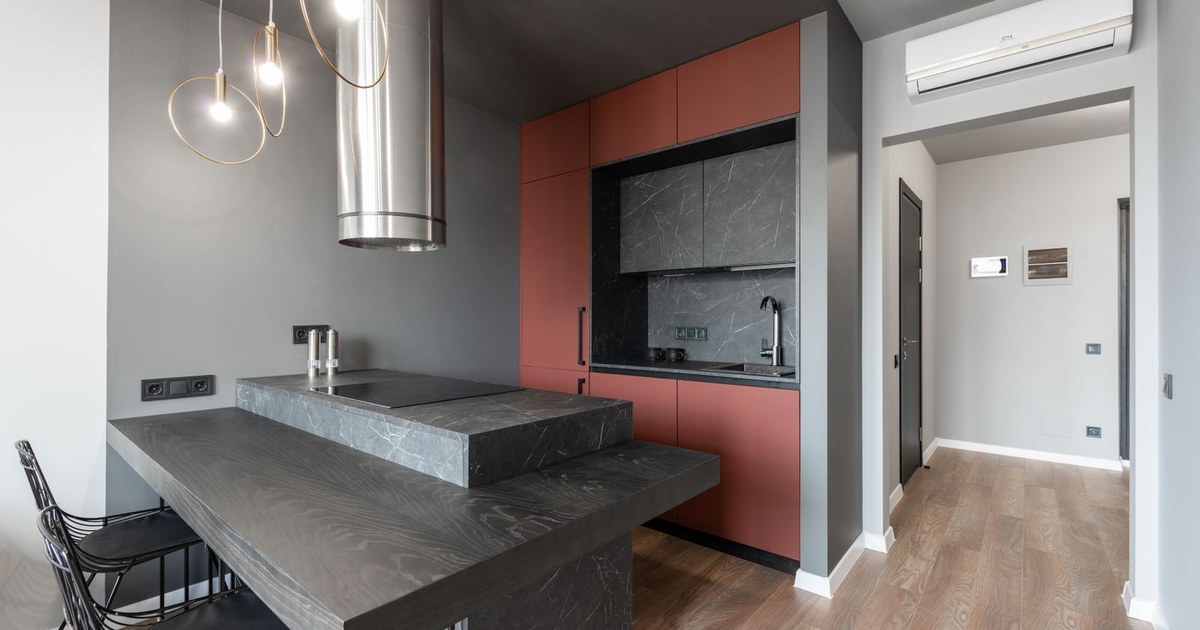
Searching for a modular kitchen near me in Kochi returns dozens of suppliers quoting wildly different prices for what looks like the same kitchen. The difference is almost entirely material, and most of it is invisible once the kitchen is installed. This guide covers the four decisions that determine both cost and lifespan, namely carcass, shutter, edge banding and hardware, and explains which choices genuinely matter in a coastal climate.
Key Takeaways
- The carcass is the part you never see and the part that fails first. In Kochi it deserves the largest share of your attention.
- Shutter finish drives visible cost, but edge banding thickness quietly determines how long that finish survives daily use.
- Hardware is where cheap kitchens reveal themselves within eighteen months, and it is the easiest specification to verify physically.
Carcass Materials Ranked for Kochi
The carcass is the structural box behind the shutters. It carries the weight, holds the hardware and takes the moisture. In Kochi, where humidity is sustained and monsoon is long, carcass choice determines whether a kitchen lasts five years or fifteen.
Marine grade plywood sits at the top. It uses better veneers and stricter bonding, and it is the sensible choice for the sink cabinet and anything in the wet zone. BWP grade commercial plywood is the mainstream option and performs well throughout a Kochi kitchen. HDHMR is denser than MDF, holds screws better and is a reasonable mid tier choice for dry zones away from water.
Plain MDF and particle board sit at the bottom for this climate. Both swell rapidly once moisture reaches the core, and in a Kerala kitchen moisture reaches the core. Aluminium and PVC carcasses are fully waterproof and genuinely durable, but they limit finish options and read differently from timber based cabinetry. Standards for plywood grading are published by the Bureau of Indian Standards, and legitimate boards carry verifiable markings.
Shutter Finishes and What They Cost You
Shutters are what you see and touch, and they carry most of the visible cost difference between kitchens. Each finish trades appearance against durability and maintenance, and the right answer depends heavily on how heavily the kitchen is used.
Laminate is the practical workhorse. It is durable, available in many finishes, repairable panel by panel and comfortably the best value for a busy family kitchen. Acrylic gives a high gloss seamless look at a significant premium, but shows fingerprints and fine scratches readily. Membrane or PVC foil wraps around profiled shapes cheaply but can lift at edges over time in heat and humidity.
Veneer offers real timber character and can be refinished, though it needs sealing and is less forgiving of water. Lacquered glass is striking and easy to wipe but expensive and vulnerable at edges. For most Kochi kitchens, matt laminate in the cooking zone with an acrylic or veneer accent elsewhere gives the best balance of appearance, cost and daily practicality.
Ask where the boards are stored before fabrication, because storage matters almost as much as grade in this climate. Plywood stacked flat under cover in a dry workshop behaves quite differently from board left leaning against a wall in a humid open shed. Visit the workshop if you can. It takes half an hour and tells you a great deal about whether the material you are paying for will reach your kitchen in the condition it left the mill.
Edge Banding, the Detail Nobody Asks About
Edge banding seals the exposed edges of every panel. It is the single cheapest component in a kitchen and the one most responsible for premature failure, because a poorly sealed edge is exactly where water enters the carcass core.
Thickness matters. Cheap kitchens use very thin banding that chips, lifts and eventually peels, particularly on frequently opened doors and drawer fronts. Thicker banding of one or two millimetres resists impact and stays sealed far longer. Ask specifically what thickness is being used, because it rarely appears in a quotation and is easy to reduce without the client noticing.
Application method matters too. Machine applied banding with proper adhesive under heat produces a far better seal than hand applied banding finished on site. Ask where the panels are edged, and if the answer is on site, treat that as a warning. Inspect a sample panel and run your fingernail along the edge. A good edge feels continuous and a poor one catches immediately.
Consider the interaction between shutter finish and the light in your kitchen. A dark matt shutter in a room with a single north facing window will make the kitchen feel closed, while the same finish in a bright room reads as sophisticated. Look at samples in the actual kitchen at the times of day you cook rather than in a showroom under display lighting. Our 3D visualisation service is genuinely useful here for testing combinations before committing.
- Ask for banding thickness in millimetres, not adjectives.
- Prefer machine applied banding over hand finishing on site.
- Check all four edges of a sample panel, not just the front.
- Confirm internal panel edges are banded, not left raw.
Hardware, Where Cheap Kitchens Fail
Hinges, channels and lift systems are used dozens of times a day. They are also the easiest component to downgrade invisibly in a quotation, and the first thing to fail in a kitchen that was priced too keenly.
Soft close hinges and full extension channels from a recognised manufacturer cost several times more than unbranded equivalents and last very substantially longer. Weight rating matters in a Kerala kitchen, where drawers hold heavy vessels rather than light kitchenware. Ask for the specific brand and series, not just a brand name, because most manufacturers produce several tiers.
Verify physically rather than on paper. Open and close a sample drawer, load it, and feel the action. A good channel is smooth loaded and unloaded, and a poor one is obvious immediately. In coastal Kochi, ask about corrosion protection on the metalwork, because plain finishes pit in humid salt air within a few years while properly coated hardware does not.
Countertops and Backsplashes
The countertop takes heat, impact, oil and acid daily, and it is expensive to replace once installed. Material choice here is a long term decision that should reflect how the kitchen is actually used rather than how it photographs.
Granite remains the practical choice for heavy Kerala cooking, tolerating hot vessels and resisting most staining when sealed. Quartz is engineered, consistent and highly stain resistant, but tolerates direct heat less well and can discolour with prolonged sun exposure. Solid surface materials allow seamless joints and integrated sinks but scratch more readily and suit lighter use.
For the backsplash, a full height hard surface behind the hob is considerably easier to maintain than tiled joints, which trap grease no matter how well grouted. Where tiles are used, specify epoxy grout rather than cement. Extend the backsplash the full height to the wall units rather than stopping partway, because the gap above a partial splashback is exactly where grease accumulates and cleaning is awkward.
Ask about the sink and its installation detail as well, since this is where most kitchens eventually fail. An undermount sink looks better and requires a properly sealed stone edge, while a top mount is more forgiving and easier to reseal later. Whichever you choose, the cabinet beneath should have a moisture resistant base and ideally a removable tray, so a slow leak is visible and contained rather than quietly destroying the carcass.
Conclusion
Choosing a modular kitchen near me in Kochi comes down to four specifications that mostly cannot be seen. Get the carcass grade right for a humid coastal climate, choose a shutter finish suited to how heavily you cook, insist on thick machine applied edge banding, and verify hardware physically before approving it. Those decisions determine lifespan far more than any visible design choice. To discuss a kitchen specification, contact our design team.