
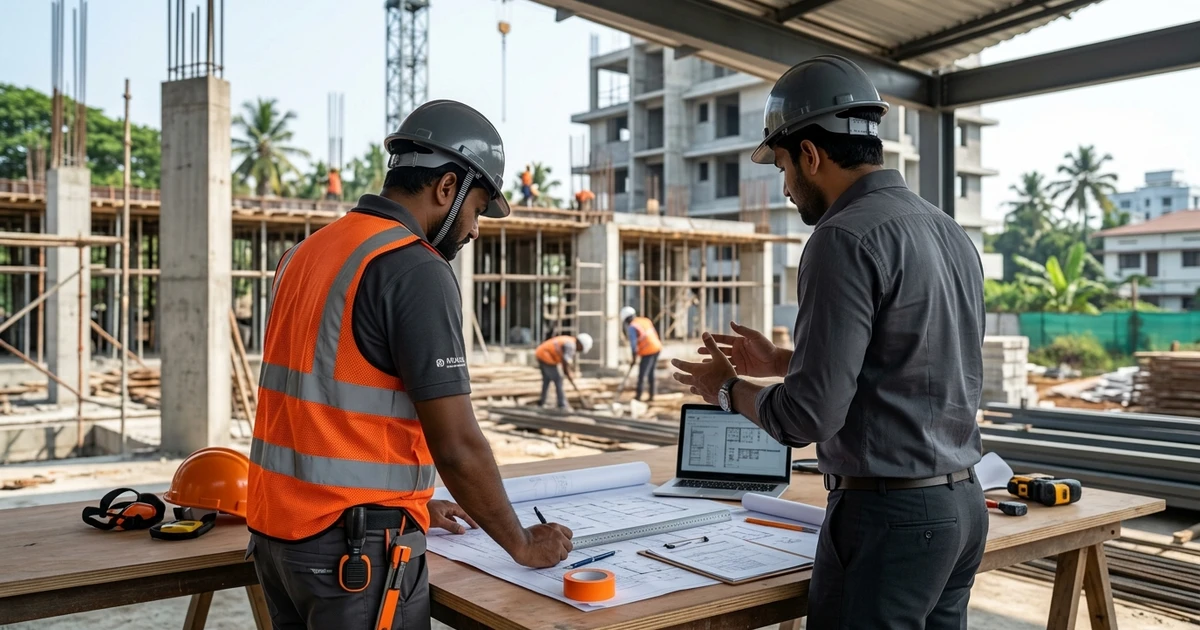
Choosing a contractor is the single highest impact decision in a construction project. Design can be corrected on paper and materials can be substituted, but a contractor who cannot manage a programme, pay subcontractors on time or communicate honestly will cost you far more than any specification choice. Searching for building contractors near me in Kochi produces a long list. This checklist gives you twelve questions that reduce that list to a shortlist worth meeting.
Key Takeaways
- Verify registration, GST and insurance before anything else. A contractor unwilling to share these should be removed from the list immediately.
- Visit an active site rather than only a completed one. How a contractor runs work in progress tells you more than a finished photograph.
- Tie payments to verified stage completion, never to dates, and never pay more than the value of work actually completed.
Verify the Basics Before You Meet
A short amount of desk work removes a surprising number of candidates before you spend time meeting them. Registration, tax status, insurance and a verifiable business address are minimum standards, not extras, and any hesitation in producing them is itself the answer.
Ask for the firm’s registration details, GST number and proof of workmen’s compensation insurance. Confirm the business address exists and is not simply a residential correspondence address. Check how long the firm has traded under its current name, because contracting businesses that repeatedly rebrand often do so for reasons worth understanding. None of this guarantees quality, but its absence reliably predicts problems.
Also establish who will actually run your project. Many firms sell with a senior figure and deliver with a junior site engineer you never met. Ask to meet the person who will be on site weekly, and ask how many other projects they are simultaneously responsible for. A site engineer running six projects across Ernakulam will not give yours the attention the sales meeting implied.
Visit a Live Site, Not Just a Finished One
Completed project photographs are curated. An active construction site is not, and it reveals how a contractor actually operates. Twenty minutes on a working site tells you more about a firm than an hour in their office looking at a portfolio.
Look at whether materials are stored properly and protected from rain. Check whether workers have basic safety equipment. See whether the site is tidy, whether reinforcement is stacked clear of the ground, and whether there is a visible programme on display. Ask the site engineer a technical question and judge whether the answer is confident or evasive. These signals correlate strongly with how your project will be run.
Speak to the client of that live project if you can. Ask specifically about communication rather than quality, because quality problems are visible and communication problems are not. Ask whether the contractor raises issues early or presents them as accomplished facts. Ask whether invoices have matched the agreed schedule. Two honest conversations with current clients are worth more than any number of testimonials.
Ask about their subcontractors as well, since most Kochi contractors engage specialist trades for electrical, plumbing and waterproofing. Find out whether those relationships are long standing or whoever was cheapest that month. A contractor who uses the same electrician across years has a working relationship that produces better coordination and faster correction when something is wrong. Frequent churn among subcontractors usually indicates payment problems, and payment problems upstream become programme problems on your site.
Compare Quotations on the Same Basis
Three quotations that appear to price the same house frequently price three different houses. Until every proposal is normalised to the same specification, area basis and inclusion list, comparing the totals is meaningless and usually misleading.
Issue the same written specification to every contractor rather than letting each define their own. Confirm each has quoted on the same area basis. Require the exclusion list in writing from all of them. Ask each to price a small number of identical items so you have a direct comparison. Only then does the difference between totals tell you something real about cost rather than about scope.
Treat an unusually low quotation as a warning rather than an opportunity. A contractor pricing well below the market either misunderstands the scope or intends to recover margin through variations later, and both outcomes land on you. Ask a low bidder to explain their number. A good answer is specific about efficiencies. A vague answer about being competitive means the number will move once work begins.
Get the Contract Right
Most construction disputes in Kerala are contract disputes rather than technical ones. A clear written agreement covering scope, programme, payment, variations and dispute resolution prevents the great majority of them, and it costs nothing to insist on before signing.
The contract should name the specification, the agreed programme with stage dates, the payment schedule tied to verified completion, the process for pricing variations, and the retention held until defects are made good. It should state who supplies materials and who approves them. It should record what happens if either party delays. Verbal understandings are worth nothing once a project is under pressure.
Pay particular attention to the variation clause. Changes happen on every project, and the question is whether they are priced before or after they are carried out. Insist that no variation proceeds without a written instruction and an agreed price. This one clause prevents the most common form of budget overrun on residential construction, where a series of small unpriced changes becomes a large unexpected invoice at the end.
Include a clause covering what happens if the contractor abandons the work or becomes insolvent. It is uncomfortable to raise and occasionally necessary. Specify that drawings, approvals and any materials already paid for remain your property, and that you may engage another contractor to complete the work. Trade publications such as NBM and CW cover the contractual and market conditions affecting Indian construction, and it is worth understanding the environment your contractor is operating in.
Structure Payments to Protect Yourself
Payment structure determines your leverage throughout the project. Once you have paid ahead of the work completed, you have transferred your negotiating position to the contractor, and recovering it is difficult. The structure matters more than the total.
Tie each instalment to a stage that can be physically verified, such as completion of foundation, roof slab or plastering. Keep the value of work completed slightly ahead of the value paid at all times. Retain a percentage until the defects period ends. Avoid large mobilisation advances, and where one is unavoidable, keep it modest and set against a specific early deliverable.
Document each stage payment with photographs and a short written confirmation of what has been completed. This takes minutes and resolves most later disagreements immediately. If your contractor also handles interiors, agree how the two scopes interact, because the boundary between construction and interior design services is where responsibility most often falls between two parties.
Keep your own simple record alongside the contractor’s. A dated note of what was agreed at each site visit, photographs of each stage, and a file of every invoice and variation takes very little effort and settles almost every subsequent disagreement immediately. Clients who maintain this find that disputes rarely escalate, because the facts are not in question. Clients who rely on recollection find that two people remember the same conversation quite differently once money is involved.
- Never pay more than the verified value of completed work.
- Tie instalments to physical stages, not calendar dates.
- Retain five percent until the defects period ends.
- Photograph each stage before releasing payment.
Conclusion
Choosing between building contractors near me in Kochi comes down to evidence rather than impression. Verify the basics on paper, visit a live site, normalise the quotations, insist on a proper contract, and structure payments so you are never ahead of the work. A contractor who welcomes all five is telling you something useful about how they operate. To discuss a residential or commercial project in Kochi, get in touch with our team.